Sikhote-Alin Meteorite
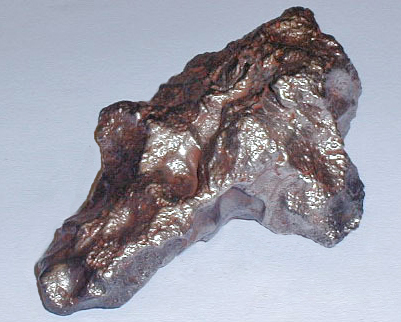
163.5g Individual from the Sikhote-Alin Meteorite
On February 12, 1947, at 10:38 AM local time near the village of Paseka in the Sikhote-Alin Mountains of eastern Russia (about 270 miles NE of Vladivostok), a meteor fall was seen and heard by people from as far as 200 miles away. Witnesses described a flash "as bright as the sun," as much of the mass exploded at about 3.5 miles altitude, and the trail of smoke and dust lingered in the sky for hours. One of the witnesses was an artist, P. J. Medvedev, who saw the event from the town of Iman while he sat at a window preparing to work. He immediately drew a sketch that became a painting featured on a 1957 postage stamp.
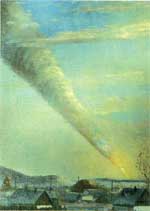
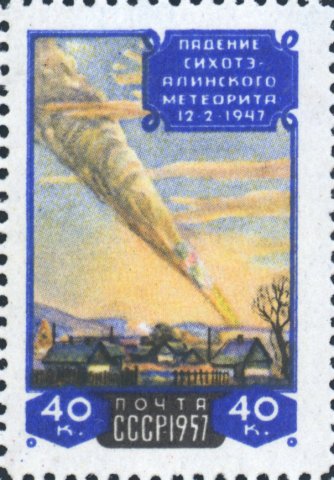
P. J. Medvedev's original painting (now at the Fersman Mineralogical Museum
in Moscow) and the stamp issued on the 10th anniversary of the meteorite's fall
The Sikhote-Alin meteorite is composed mostly of iron (93%) with nickel (5.9%). There are also small amounts of cobalt (0.42%), phosphorus (0.46%) and sulfur (0.28%) present, plus traces of iridium, germanium, and gallium. Evidence indicates that it came from the core of an asteroid in the belt between Mars and Jupiter and dates back over 4.5 billion years, to the early formation of the solar system.
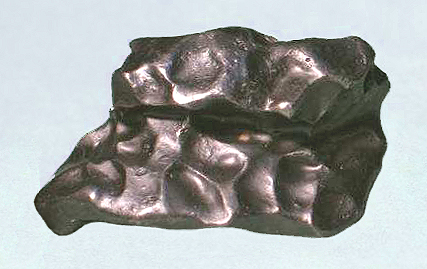
65.3g Individual
56g Individual with Rollover Lip
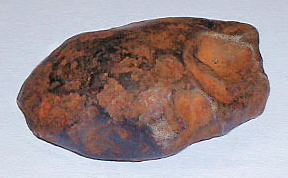
62.5g Individual
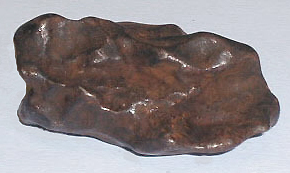
60.5g Individual
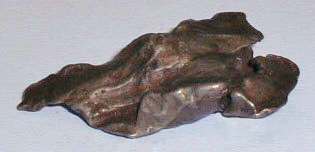
30.8g Shrapnel Fragment
.